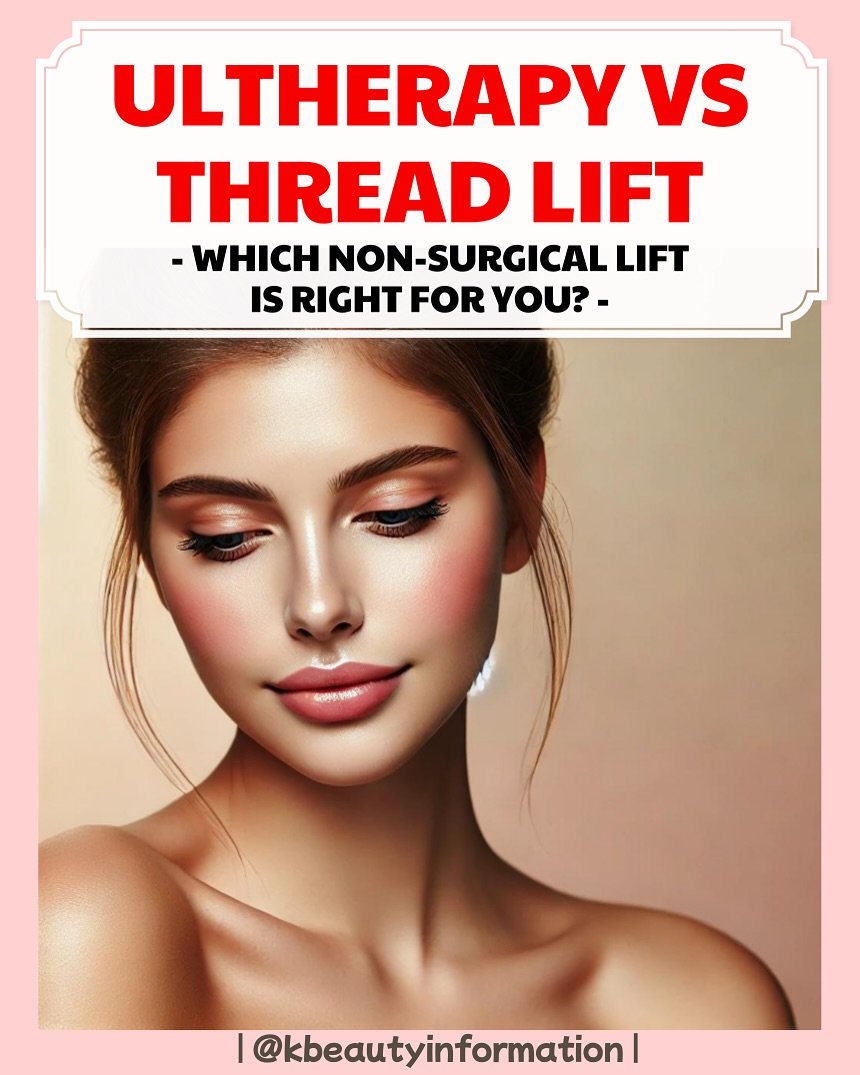
Ultherapy and thread lifting are two of the most talked-about non-invasive treatments in Korea, but they work very differently.
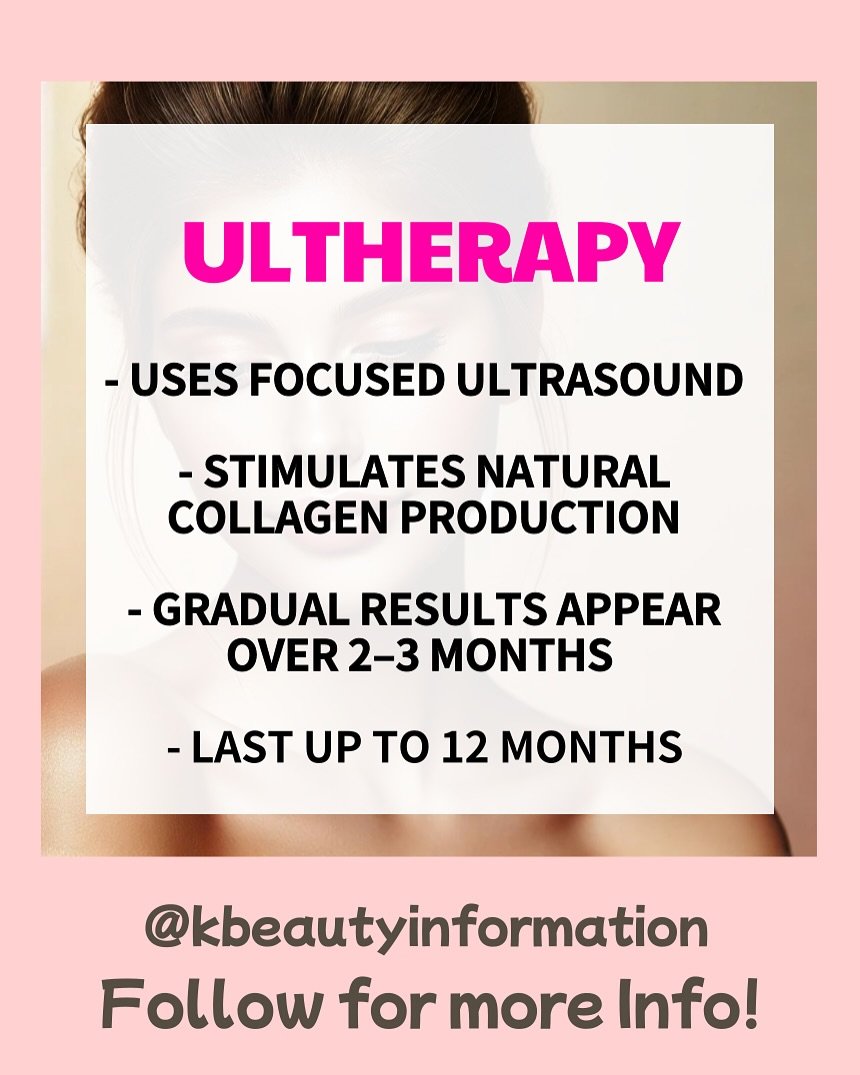
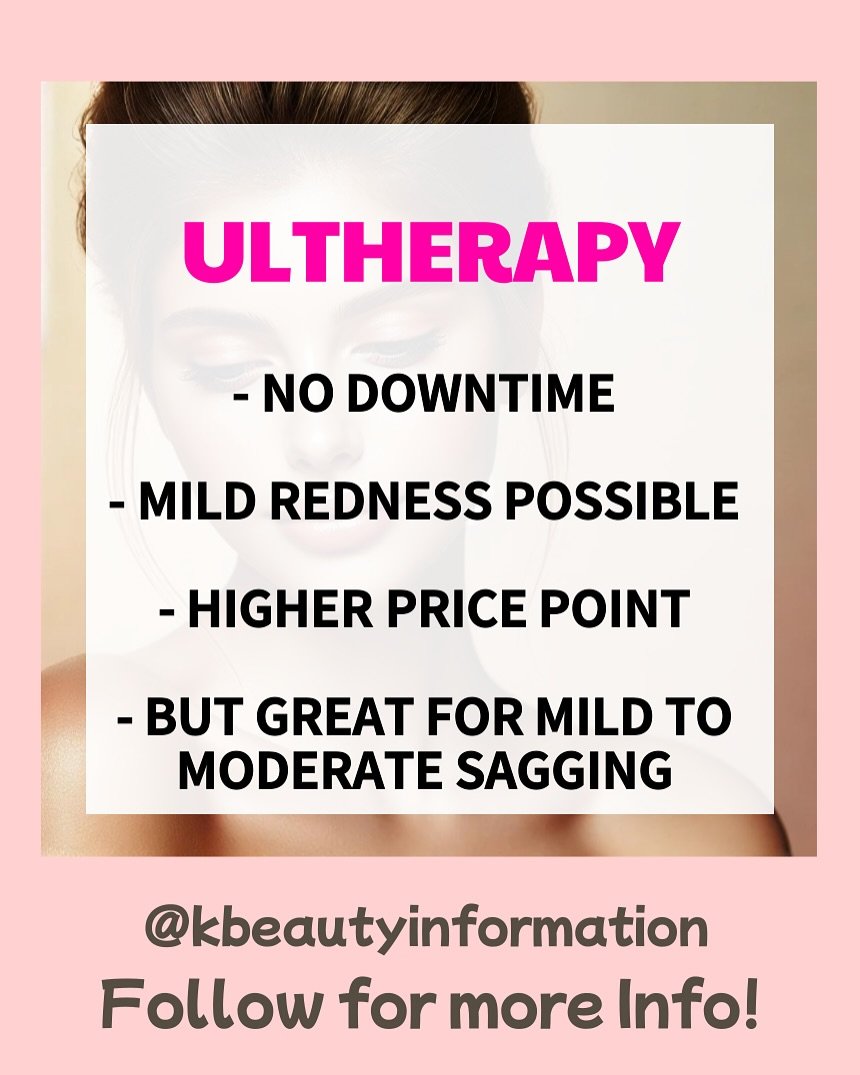
Ultherapy (HIFU-based)
Uses focused ultrasound to heat the SMAS layer, the same layer targeted in a surgical facelift, to stimulate collagen production over time. Results build gradually over 2-3 months and can last up to 12 months. Downtime is minimal, with mild redness possible. It tends to cost more, and works best for mild to moderate sagging where a subtle, natural-looking lift is the goal.
Thread lifting
Involves inserting dissolvable threads (PDO, PLLA, or PCL) to physically pull and anchor sagging skin, with some collagen stimulation as a secondary effect. The lift is visible right away. Swelling, bruising, or tightness can occur for a few days. Results last 6-12 months depending on the thread type and technique, and it’s often chosen for moderate sagging or when faster results matter.
Which is better depends on your skin condition, tolerance for downtime, and what you’re hoping to see. Some people combine both for a layered effect.

Not sure which one fits you? Message me on Instagram, @kbeautyinformation.
How long do Ultherapy results last compared to thread lift?
Ultherapy results build gradually over 2-3 months and can last up to 12 months. Thread lift results are visible right away and last 6-12 months depending on the thread type and technique used. Ultherapy suits a slower, more natural-looking lift.
Which has less downtime, Ultherapy or thread lift?
Ultherapy has minimal downtime with only mild redness possible. Thread lifting can cause swelling, bruising, or tightness for a few days after the procedure. Ultherapy tends to cost more and suits mild to moderate sagging.
Can Ultherapy and thread lift be combined?
Some people combine both treatments for a layered effect, since Ultherapy targets deeper collagen stimulation while thread lifting provides an immediate visible lift. Which combination fits depends on skin condition and downtime tolerance.