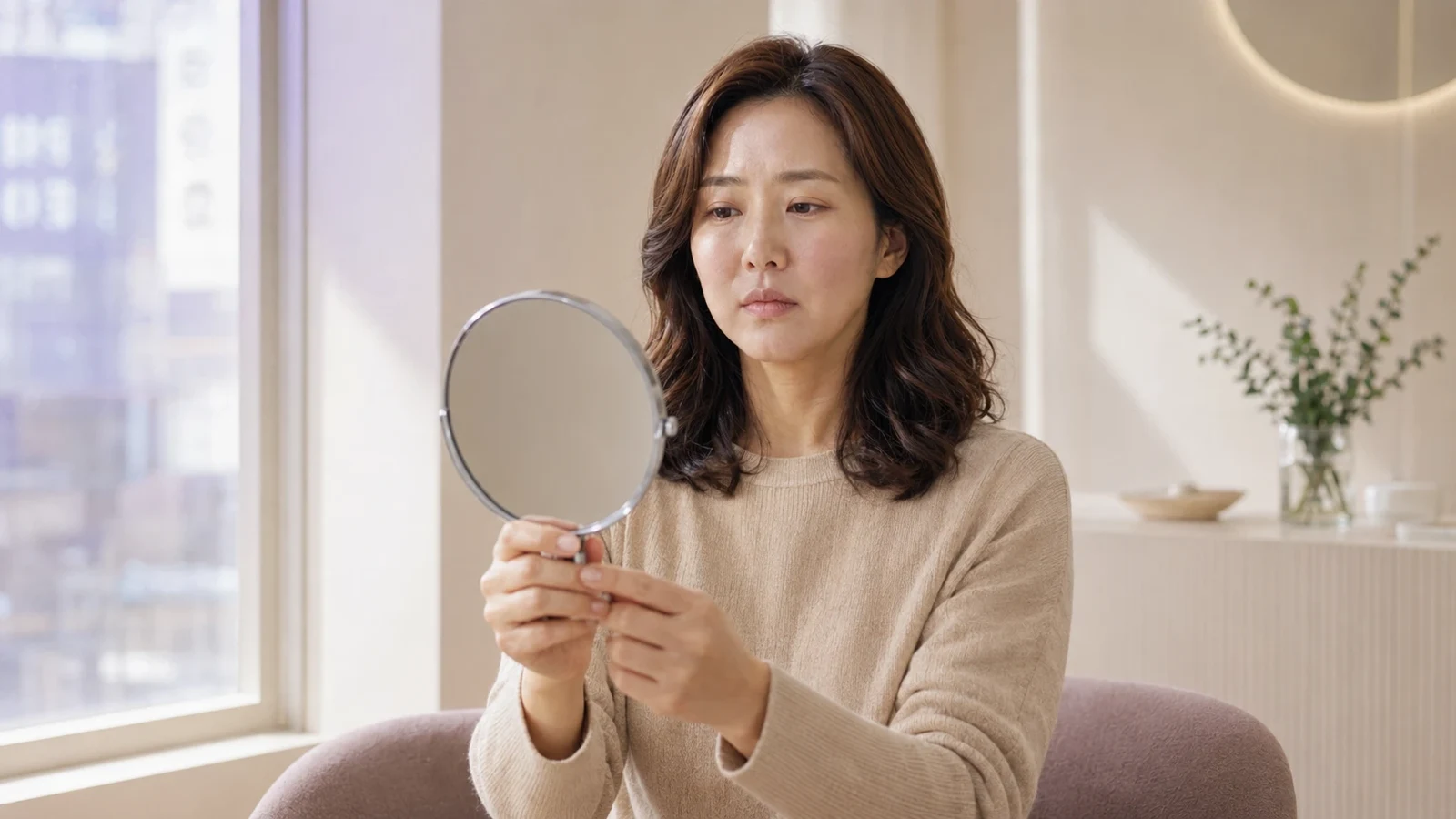
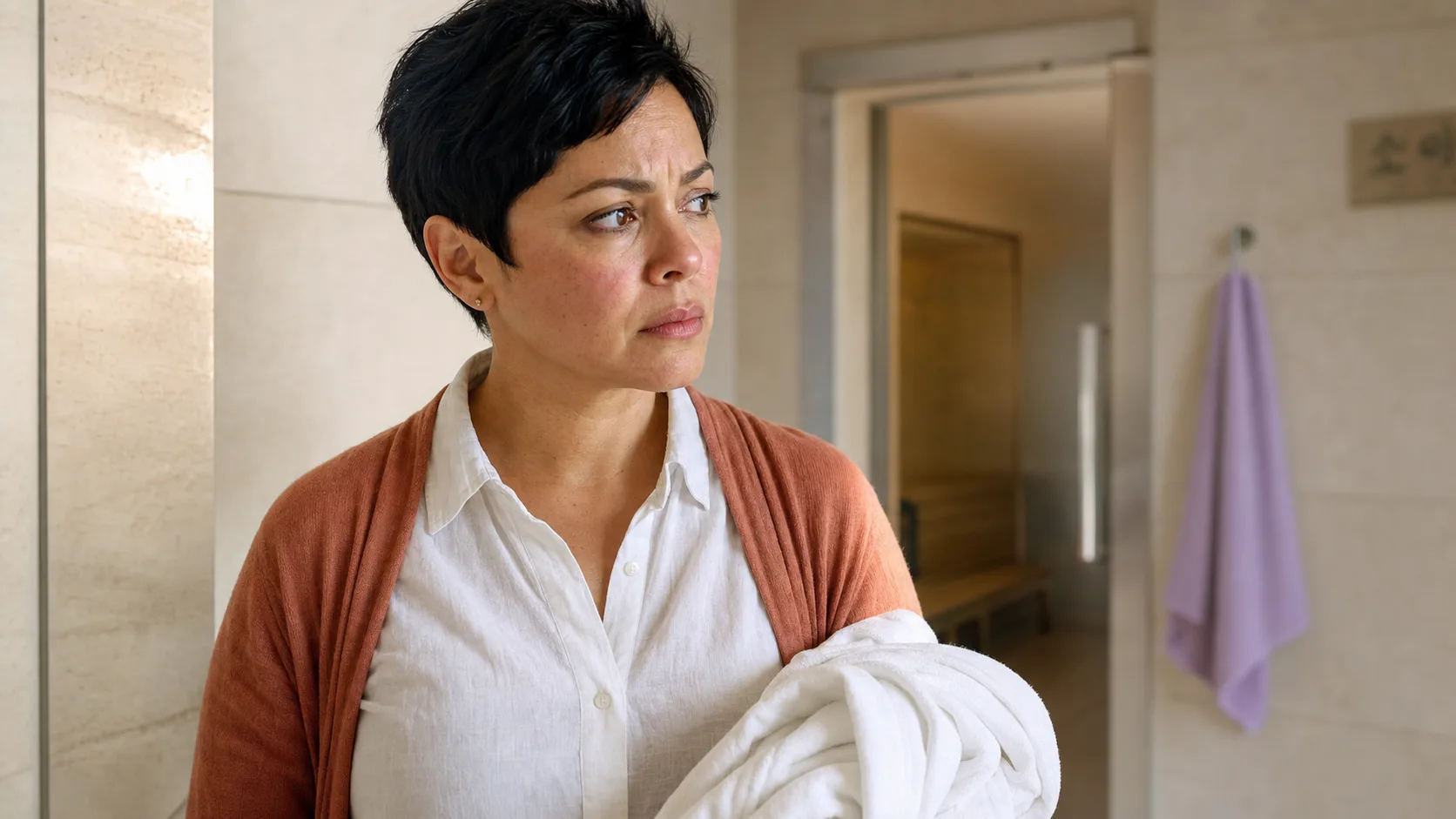
Consistently good skin in Korea often gets credited to skincare products alone, but sauna culture plays a real role too. Regular jjimjilbang sessions work more like a form of contrast therapy than simple relaxation, alternating between heat and cold in a way that affects the skin from the inside.
Heat opens things up
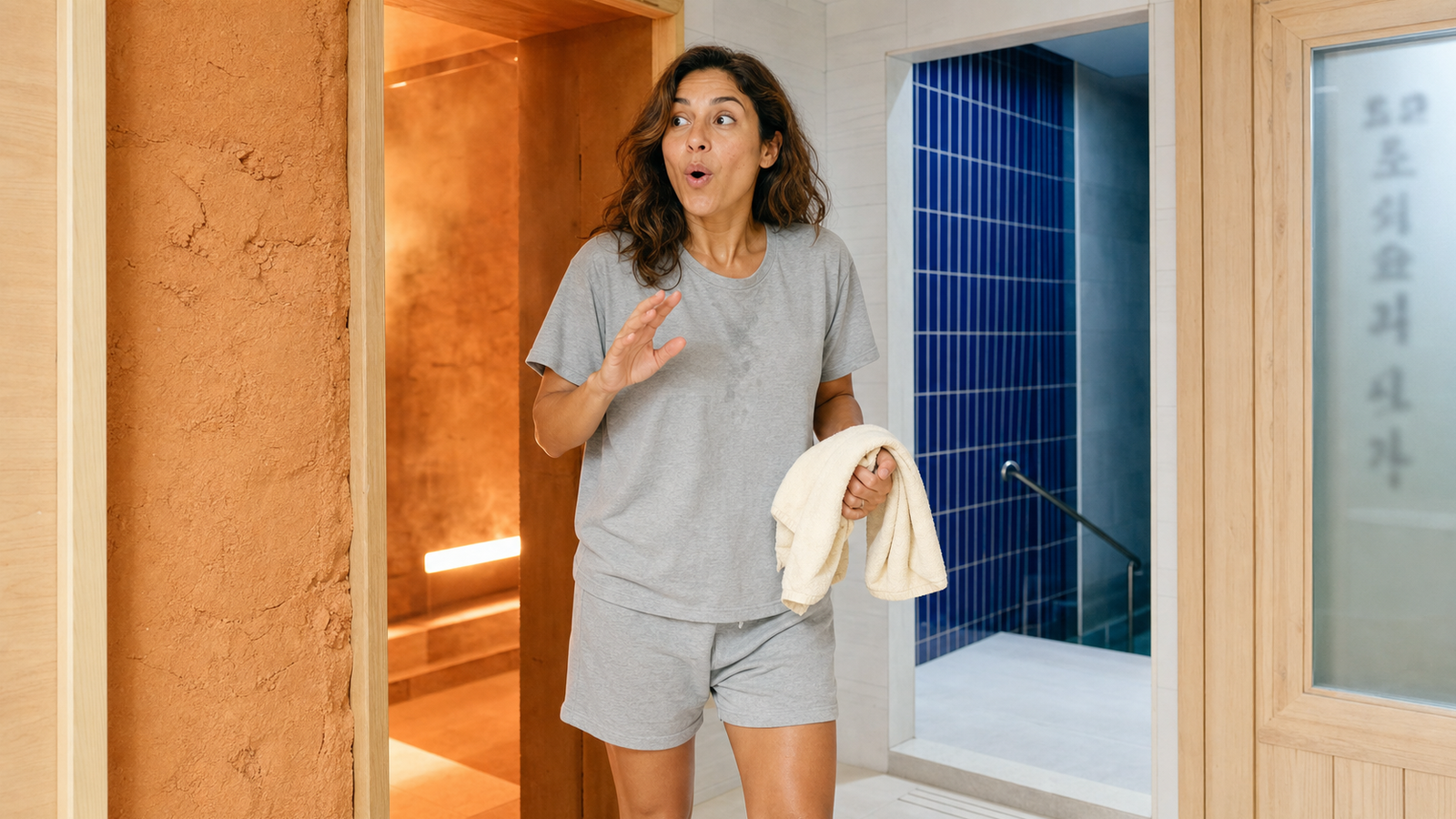
Heat expands blood vessels, which pushes oxygen and nutrients toward skin cells more directly than a cream applied on the surface ever could.
The hot-cold cycle manages stress hormones
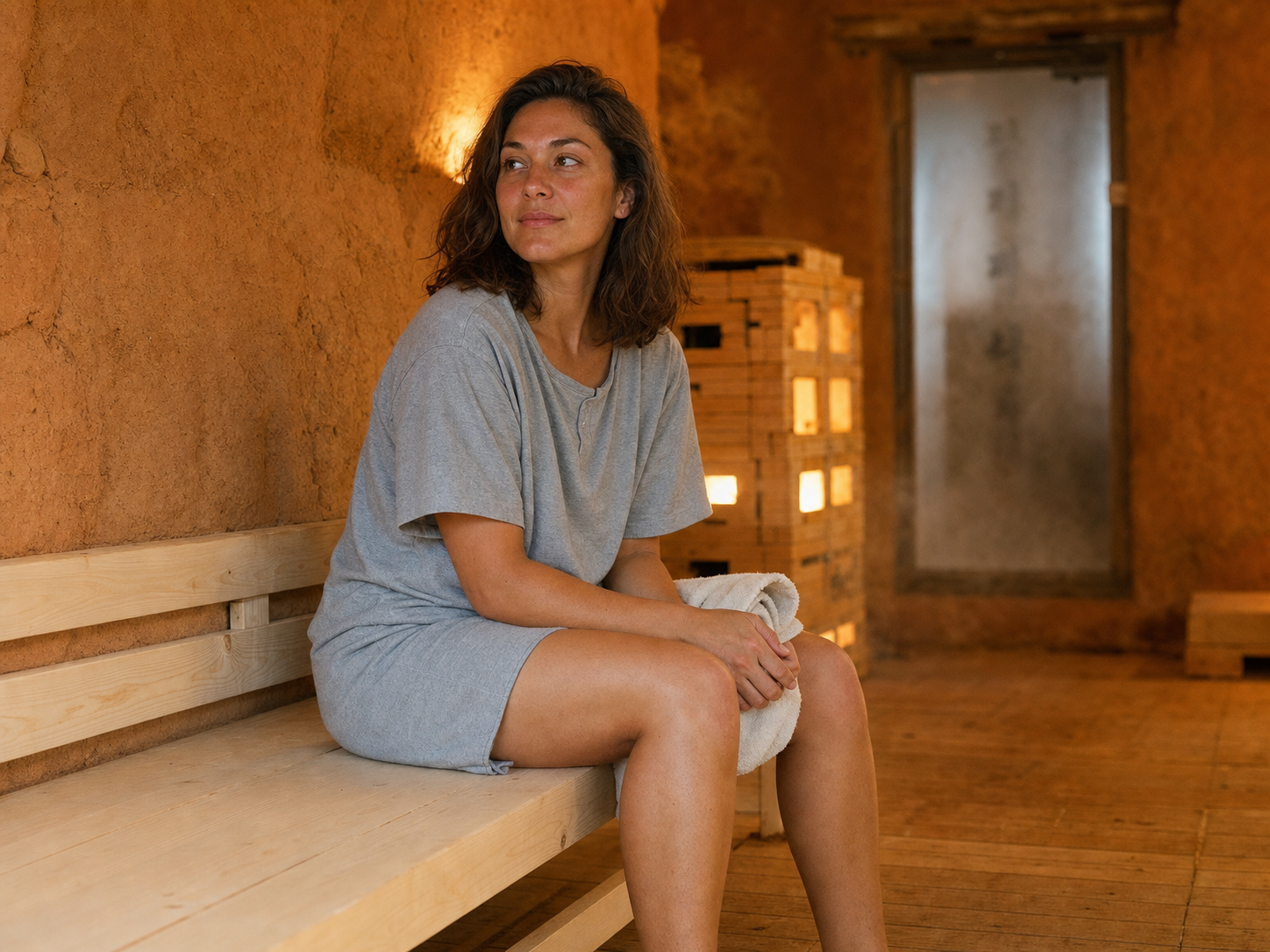
High temperatures can help regulate cortisol, and lower cortisol tends to mean less of the inflammation that contributes to acne and premature aging.
Cold plunges support drainage
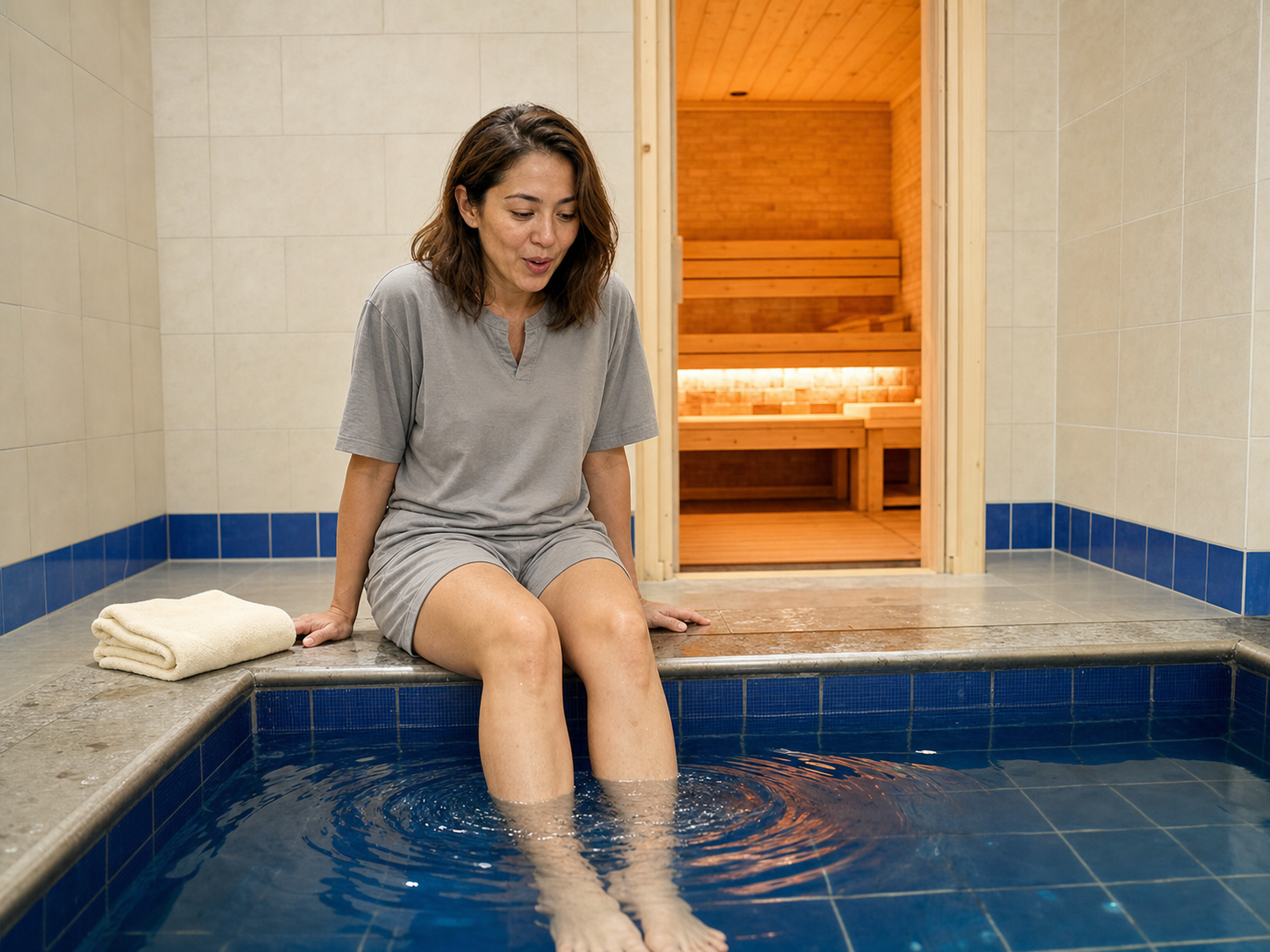
Alternating between hot and cold stimulates the lymphatic system, which helps flush out toxins and reduce facial puffiness.
My husband, who works as an MD, and I try to fit this into our week as a kind of biological reset. It’s less about chasing a quick fix and more about treating it as part of an ongoing wellness routine.
Questions to save before your consultation
- How often should I go to a jjimjilbang for this effect?
It’s typically treated as a regular wellness habit, closer to once a week, rather than a one-time or occasional visit.
- Is heat or cold more important for the skin benefit?
Both — the alternation between heat and cold is what drives the effect, not either temperature alone.
- Can a jjimjilbang replace clinic-based skin treatments?
No — it’s discussed here as a supporting wellness habit, not a substitute for treatment.
Already planned a treatment and want it to hold up? Read our aftercare guide for a Korea skin treatment. Have you tried a jjimjilbang before, or thinking about it on your next trip? I’d genuinely like to hear how it went — reach out anytime at kimskbinfo@gmail.com.