By Kim
You have arrived at a clinic in Seoul, checked in, and suddenly wonder whether you will have enough time to explain your skin properly. In many Korean dermatology clinics, the consultation can be quite quick, often around 10 to 15 minutes, but a short appointment does not automatically mean your concerns are being ignored. It usually means the clinic expects you to arrive with a clear idea of what you hope to discuss.
Why can the consultation feel so fast?
Korean clinics often move at a streamlined pace, especially in busy areas such as Gangnam and Apgujeong. You may be asked what bothers you most, what kind of change you are hoping for, and whether you have tried anything before. If you are unsure, the doctor may suggest options based on what they see.
Still, you do not need to pretend you understand everything immediately. If you want a slower explanation, ask for one. A quick consultation is easier to navigate when you have prepared a few words for your own priorities rather than trying to explain your entire skincare history from memory.
How can you prepare for and communicate during the consultation?
Whether someone will be able to speak English depends on the clinic.

It depends on the clinic. Some clinics that regularly welcome international visitors have English-speaking staff or basic English support, while others may not. I always think it is wise to prepare for a language gap even if the clinic says English is available.
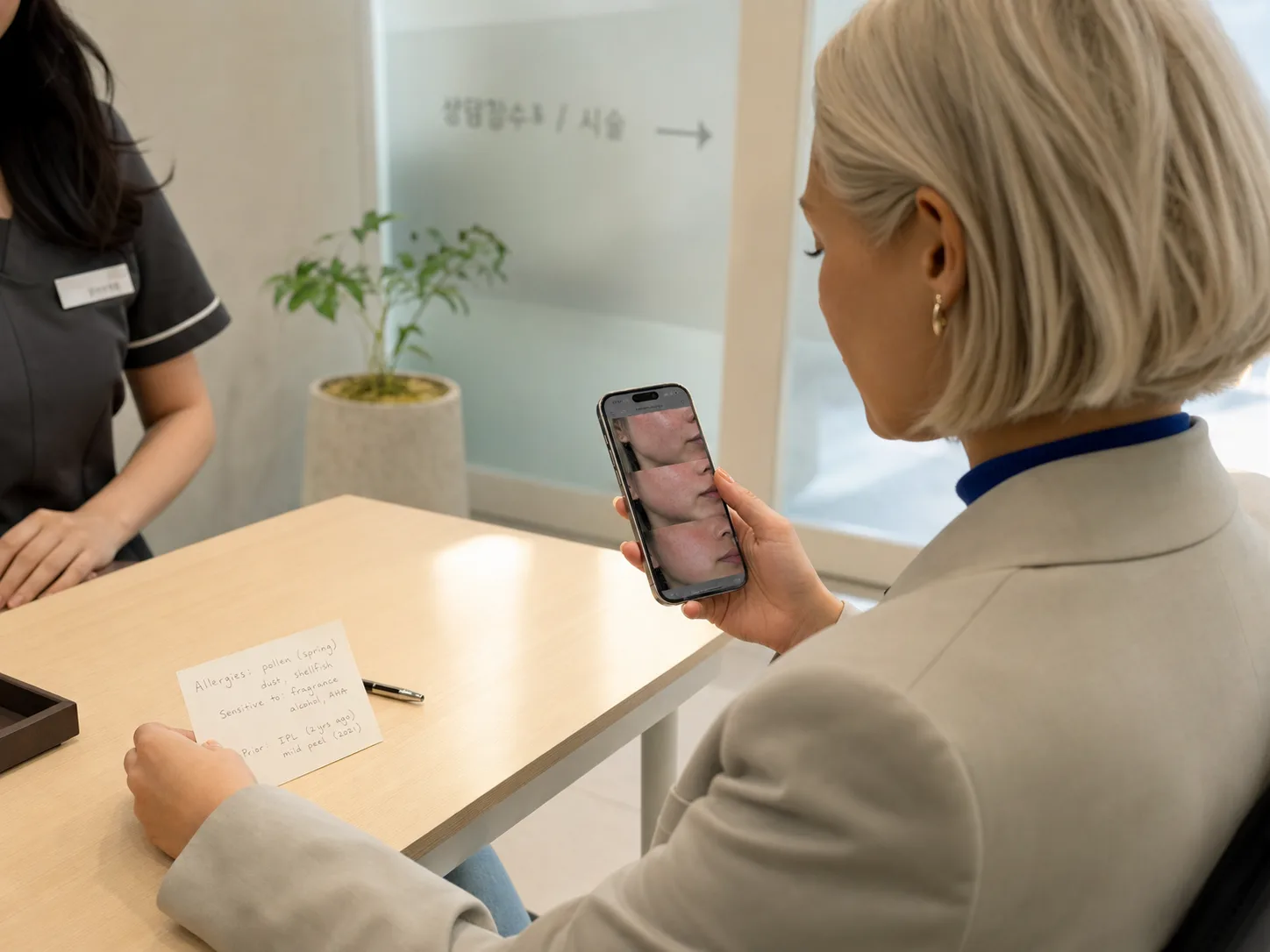
Google Translate can be helpful for short questions, and a Korean-speaking friend can make a big difference if your concerns are detailed. If you have a skin issue that comes and goes, photos can communicate more clearly than a rushed explanation through translation.
Before you go, save photos that show your skin at its worst or at different stages. Bring a short note about what you want to address, whether that is dull-looking skin, acne scars, texture, or something else. It also helps to mention allergies and skincare products or procedures you have already tried, especially if your skin reacted badly.
I would keep this simple. The goal is not to arrive with a perfect diagnosis; it is to give the clinic enough context to understand what you have noticed and what you are comfortable considering.
If this is your first visit, you can say, “처음이에요” (cheo-eum-i-e-yo), meaning “This is my first time.” It is a small sentence, but it can help signal that you may need more explanation.
If you want their opinion, try, “어떤 시술이 좋을까요?” (eo-tteon si-sul-i jo-eul-kka-yo?), which asks what procedure may be suitable for your skin. I would also ask about possible side effects, recovery, and what to avoid afterward instead of focusing only on the treatment name.
What should tourists be honest about?
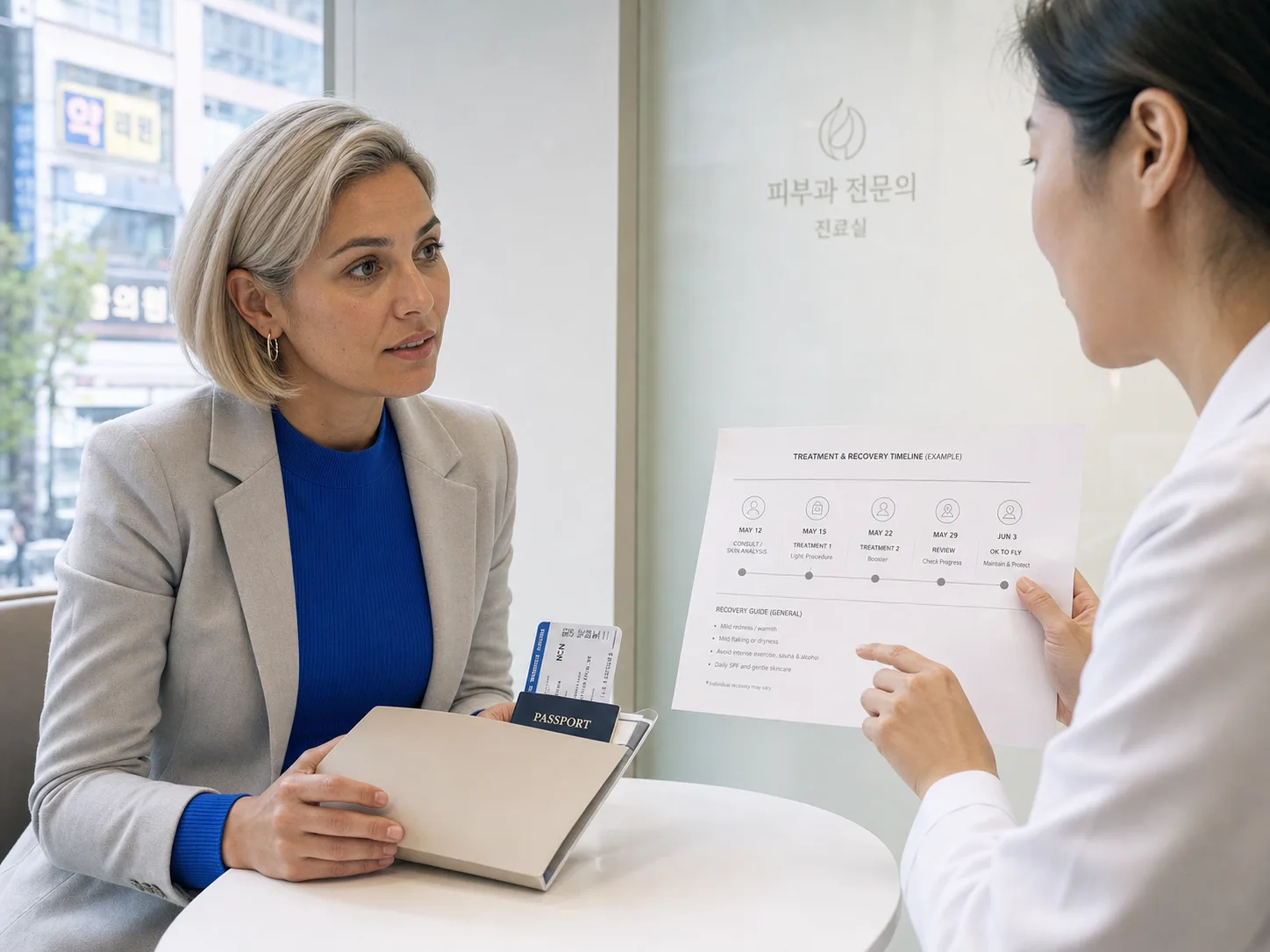
Tell the clinic how long you will be in Korea. This matters because some procedures need repeat visits, while visible changes can take weeks or months to develop. If you leave in a few days, say that clearly and ask which options, if any, may fit that timeline.
That does not mean every short-trip treatment will create a dramatic change. Some options may offer a more immediate, temporary refreshed look, while others are better approached as a longer plan. Ask what you may realistically notice before you fly home, what could look different during recovery, and whether follow-up care is needed after you leave Korea.
What questions should I ask before agreeing to a procedure?
“What is this procedure meant to improve for my skin?” This helps you separate a general recommendation from your own goal. Ask what it may help with and what it is unlikely to change.
“What might my skin look and feel like afterward?” Ask about redness, swelling, sensitivity, downtime, and when makeup or normal skincare may be possible again. This is especially important if you have travel plans, photos, or an event coming up.
“Are there alternatives, and why are you suggesting this one?”
A good consultation should leave room for you to understand your options. You can ask whether a less intensive approach or a later appointment would make more sense for your situation.
“What should I do if I have a concern after I leave Korea?” If you are traveling, it is practical to know the clinic’s follow-up process before treatment, not after.
I know it can feel awkward to slow down a busy appointment, especially when you are visiting another country. But asking clear questions is not being difficult. It is part of taking care of yourself. Go in prepared, listen carefully, and give yourself permission to pause if the plan does not feel clear yet.
How long does a Korean dermatology consultation usually take?
Consultations can be quick, often around 10 to 15 minutes. A short appointment does not mean concerns are being ignored, it usually means the clinic expects you to arrive with a clear idea of what you want to discuss.
What should tourists tell the clinic about their trip?
Tell the clinic how long you will be in Korea, since some procedures need repeat visits and visible changes can take weeks or months to develop. This helps the clinic suggest options that fit your actual timeline.