If you are looking at Korean skincare treatments and wondering why the same procedure seems to be recommended differently at different ages, you are asking the right question. Your skin does not suddenly become “bad” at a certain birthday, but its priorities can shift over time, so a routine or treatment plan that felt useful in your twenties may not address what you notice later.
Why shouldn’t I choose treatments by age alone?
Age can be a helpful starting point, not a rulebook. Skin texture, pigmentation, hydration, facial volume, sun exposure, lifestyle, and personal goals all matter too. Still, thinking about the general changes that often happen over time can help you have a more focused consultation instead of choosing a popular treatment package without knowing what it is meant to address.
What do people usually focus on in their twenties?

In your twenties, many people are working with relatively smooth texture and strong collagen support. This is often the stage where prevention and maintaining healthy-looking skin feel more relevant than trying to correct deep concerns that are not there yet. I spent most of that decade skipping sunscreen because my skin still looked fine without it, a habit I only regretted once the first real sun spots showed up years later.
Hydration-focused skin boosters, including hyaluronic-acid-based options, may appeal to people who want a fresher, more hydrated look. Mild exfoliation such as aqua peels or lower-level laser treatments may be considered for surface texture and tone. Microneedling is also often discussed for texture maintenance. The least glamorous habit is still one of the most important, consistent sunscreen use.
What changes tend to become more noticeable in the thirties?
For some people, the thirties are when early fine lines, uneven tone, or changes in firmness become easier to see. This is where the conversation often shifts from maintenance toward more active support, while still keeping expectations realistic.
In Korea, treatments such as Rejuran and UltraCol may come up in conversations about collagen stimulation. Laser toning may be considered when pigmentation or uneven skin tone is a concern. Botox or fillers can also be discussed for early wrinkles or areas where facial movement and volume changes are becoming noticeable. Ultrasound-based lifting treatments, such as Ultherapy, are another option people explore when they want to address the feeling of early laxity.
Why do forties skincare plans often combine different approaches?
By the forties, deeper wrinkles, reduced elasticity, and volume loss may become more noticeable. One treatment may not address all of those concerns in the same way, which is why combination planning is often part of the conversation.
Thread lifting and radiofrequency treatments, including Thermage, are commonly associated with lifting and firmness goals. Dermal fillers may be considered where restoring volume is the focus, while fractional lasers may be discussed for wrinkle and texture concerns. Some clinics also offer growth-factor booster treatments as part of a skin-regeneration-focused plan. The important part is understanding what each treatment is intended to do, rather than assuming a combination automatically means a bigger or better change.
What does multi-layered care mean after fifty?

For people in their fifties and beyond, skin laxity, dryness, and pigmentation can overlap. That is why plans may become more layered, with separate options discussed for lifting, volume, hydration, tone, and recovery support.
You may hear about combinations such as ultrasound lifting with fillers and pigmentation lasers. Biostimulating injections such as Ellanse may also be part of a volume or collagen-focused conversation. Hydration facials can be considered for skin-barrier support, while LED or PRP may be discussed as supportive care around healing. My own mother went through exactly this kind of layered plan a few years ago, and what struck her most was how much slower and more deliberate the whole process felt compared to the single-visit fixes she’d expected.
What should I avoid rushing into?
I would pause before booking a large age-based package because it is marketed as the “right” plan for your decade. Combining treatments can also mean planning around recovery, sensitivity, and how your skin responds over time. If your main concern is not clear yet, it is okay to start by asking which concern is being treated first.
To check whether a treatment matches your current concern, ask, “What specific change is this meant to address for me, hydration, texture, pigmentation, wrinkles, lifting, or volume?” A clear answer can help you separate a treatment’s purpose from the excitement around its name.
Recovery is worth asking about realistically, too.
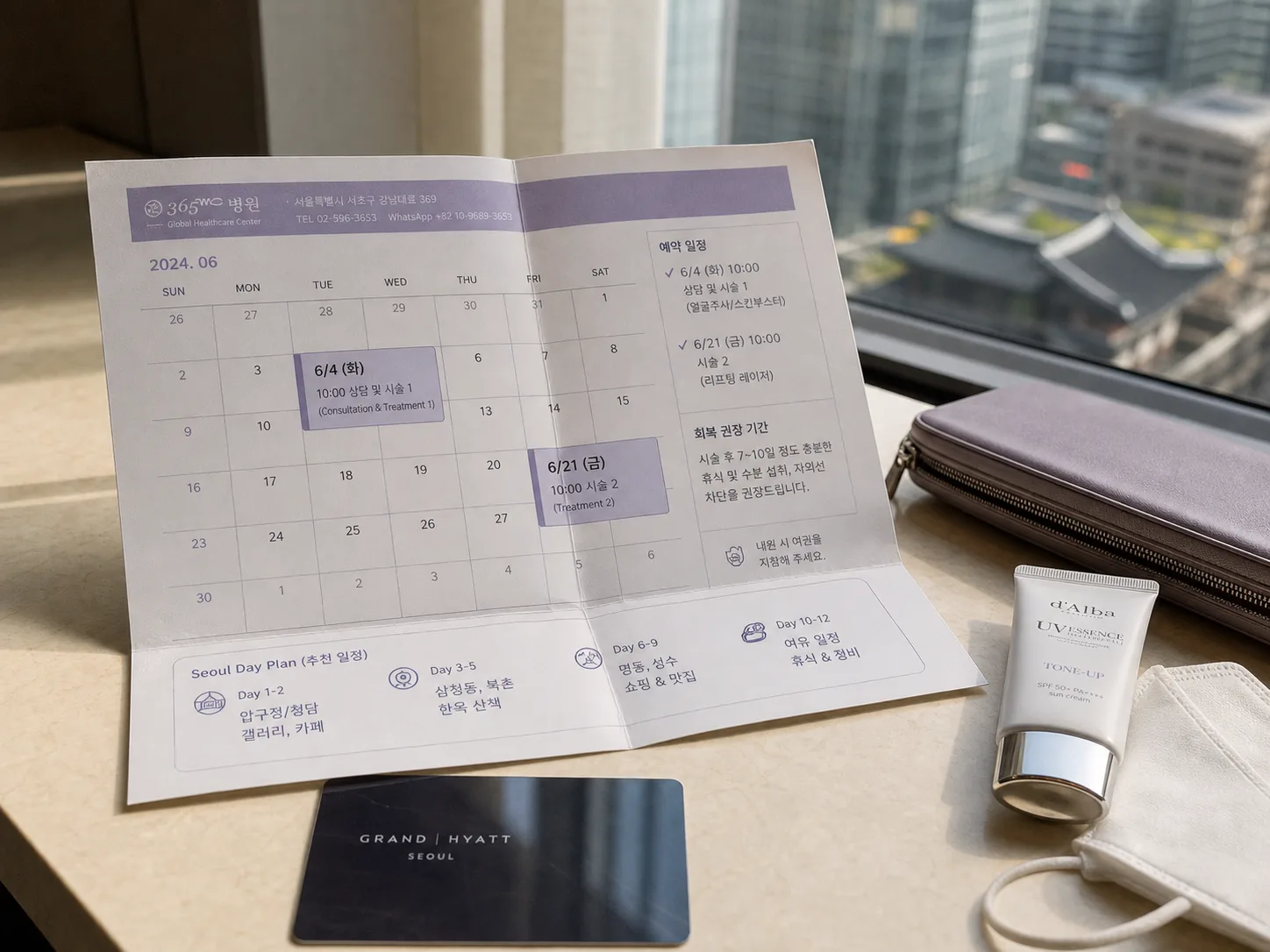
Ask, “What reactions or downtime should I expect, and how might this affect the rest of my Korea trip?” Even treatments described as mild can involve temporary redness, swelling, sensitivity, or a recovery period that is worth planning around.
If procedures are being combined, ask, “Why are these treatments being combined, and is there a reason to space them out instead?” This keeps the conversation centered on your skin goals and comfort, not on doing more in one visit.
I always come back to the same thought. Skincare is not a race against age. The most useful plan is usually the one that respects what your skin is asking for now, gives you room to think, and helps you feel informed before you decide.
Kim
What skincare treatments are commonly discussed for people in their twenties?
Hydration-focused skin boosters, mild exfoliation such as aqua peels, and microneedling are often discussed for texture and tone maintenance, alongside consistent sunscreen use as one of the most important habits.
Why do skincare plans often combine multiple treatments in the forties and beyond?
Deeper wrinkles, reduced elasticity, and volume loss can all become noticeable at once, and no single treatment addresses every concern the same way, which is why combinations like thread lifting, fillers, and fractional lasers are commonly discussed together.